Crafting and gear: when to craft versus sell
Last reviewed:
Fell and Sell crafting happens at a workbench and uses iron, wood, pelts, and magical components.
More context
The decision between crafting and selling is split across personal gear versus shop stock. Craft for personal gear when the next run's risk profile demands a higher weapon tier; craft for shop stock when the next shop day needs a higher-margin item to clear the supply-and-demand curve.
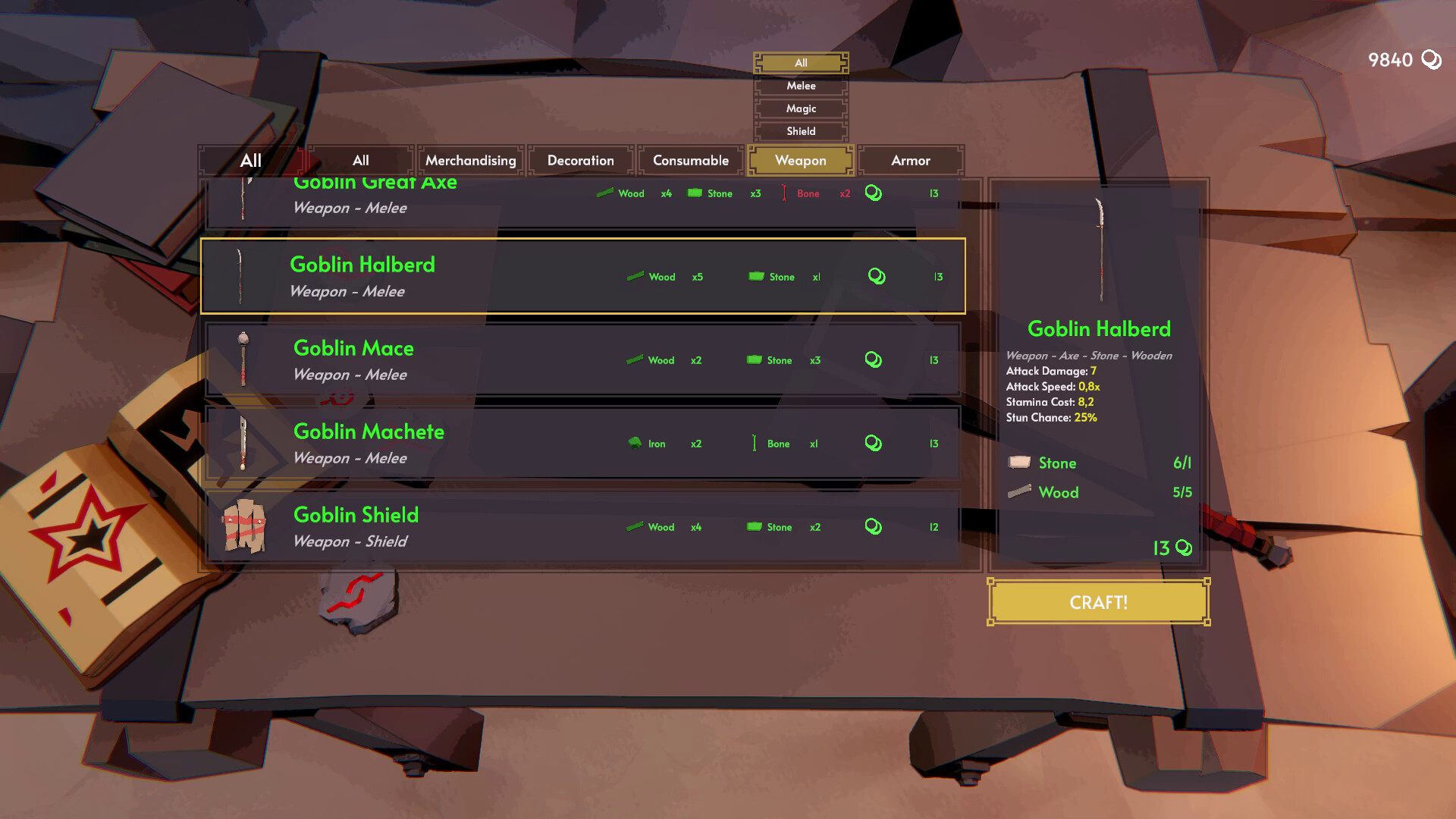
The crafting workbench
Crafting happens at a workbench that sits alongside the shop surface. Materials enter the workbench and either convert into personal gear that the player equips on the next run or into stock that the player shelves on the shop surface. The workbench framing is attributed to guide sources; the existence of crafting is official Steam feature text ("Forge stronger weapons and tougher armor").
Fell and Sell on Steam (AppID 4627110)Official store listing with release status, system requirements, and feature list.Worldeka Fell and Sell beginner guideGuide source for attributed dungeon combat, early-run, and shop basics.Fell and Sell community wikiCommunity wiki used for attributed dungeon, crafting, shop, and reinvestment loop detail.
Material types including iron, wood, pelts, and magical components
Material types include iron, wood, pelts, and magical components. Iron and wood are the basic components of the early-game weapon and armor upgrades; pelts come out of the Living Forest foraging path; magical components come out of the dungeon altars and the deeper floors. The material type list and the source paths are attributed to guide sources.
Crafting for personal gear versus crafting for stock
Crafting for personal gear reduces the next-run death penalty because the player enters the dungeon with a higher-tier weapon and armor. Crafting for stock raises the shop margin because the crafted item prices higher than the raw material would have. The trade-off is a delayed gold payout on the stock side against a reduced death penalty on the personal-gear side. The framing is attributed to guide sources.
Why crafted goods change shop margin
Crafted goods price higher than raw materials because the shop's pricing system sees the finished product as a higher-tier item. The Steam store page confirms that player-set pricing responds to supply, demand, prestige, and decoration bonuses, so a crafted good that aligns with the shop's current decoration bonus and the customer's Prestige bracket prices at a higher tier. The framing is attributed to guide sources.
When raw material is worth more sold
Raw material is worth more sold than crafted when the next run's risk profile is light and the shop day has a high demand for raw materials. The right test is the demand curve: if raw materials are clearing at a high price and crafted goods are lingering, sell the raw material and use the gold elsewhere. The trade-off is attributed to guide sources.
Reference notes
- Crafting station
- Workbench
- Material types
- Iron, wood, pelts, magical components
- Personal gear
- Reduces next-run death penalty
- Shop stock
- Raises shop margin but delays gold
- Source tier
- Steam feature list + guide attribution
Questions & answers
Should I craft for personal gear or for shop stock?
Craft for personal gear when the next run's risk profile demands a higher weapon tier. Craft for shop stock when the next shop day needs a higher-margin item to clear the supply-and-demand curve.
When is raw material worth more sold than crafted?
When the next run's risk profile is light and the shop day has a high demand for raw materials. If raw materials are clearing at a high price and crafted goods are lingering, sell the raw material and use the gold elsewhere.